
Description
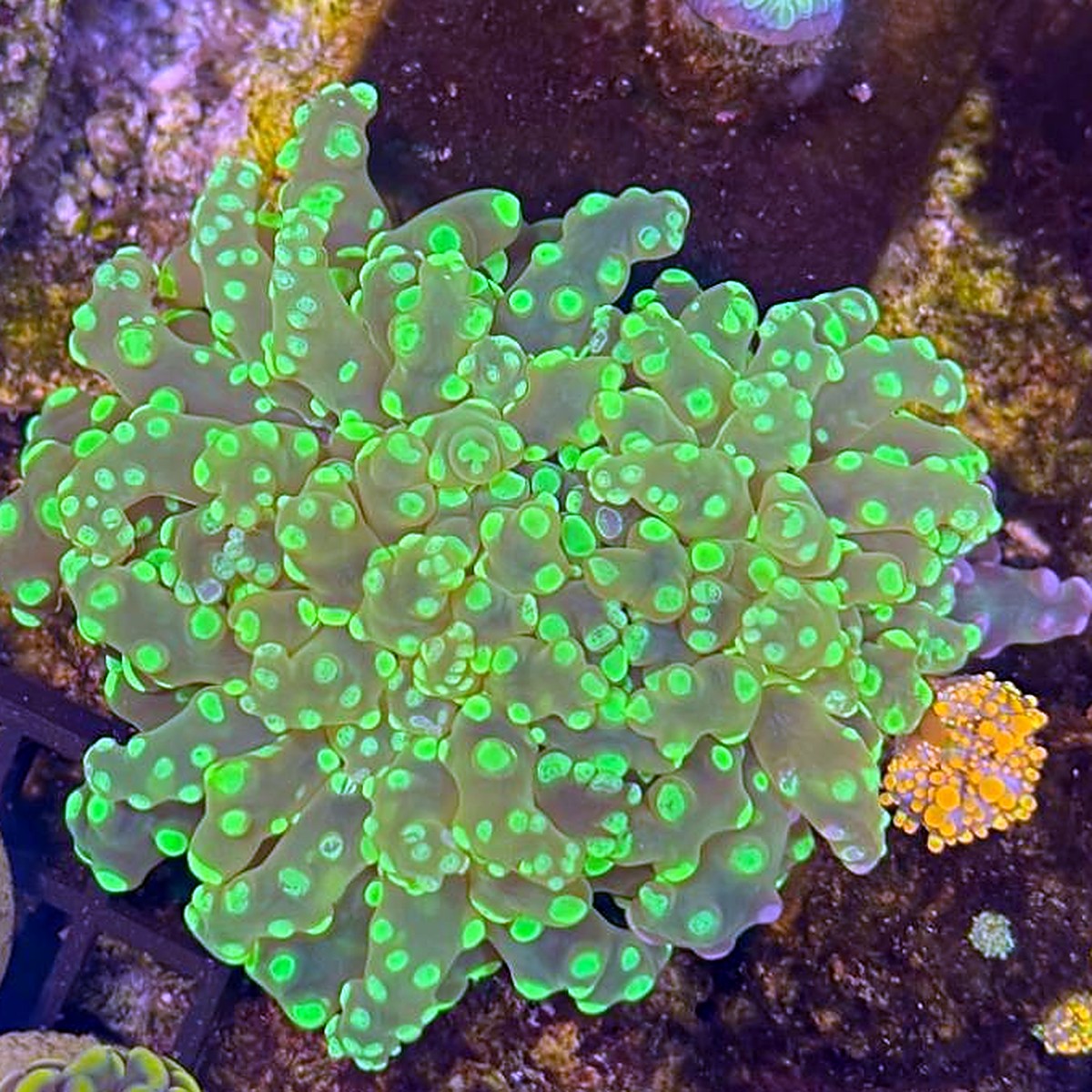
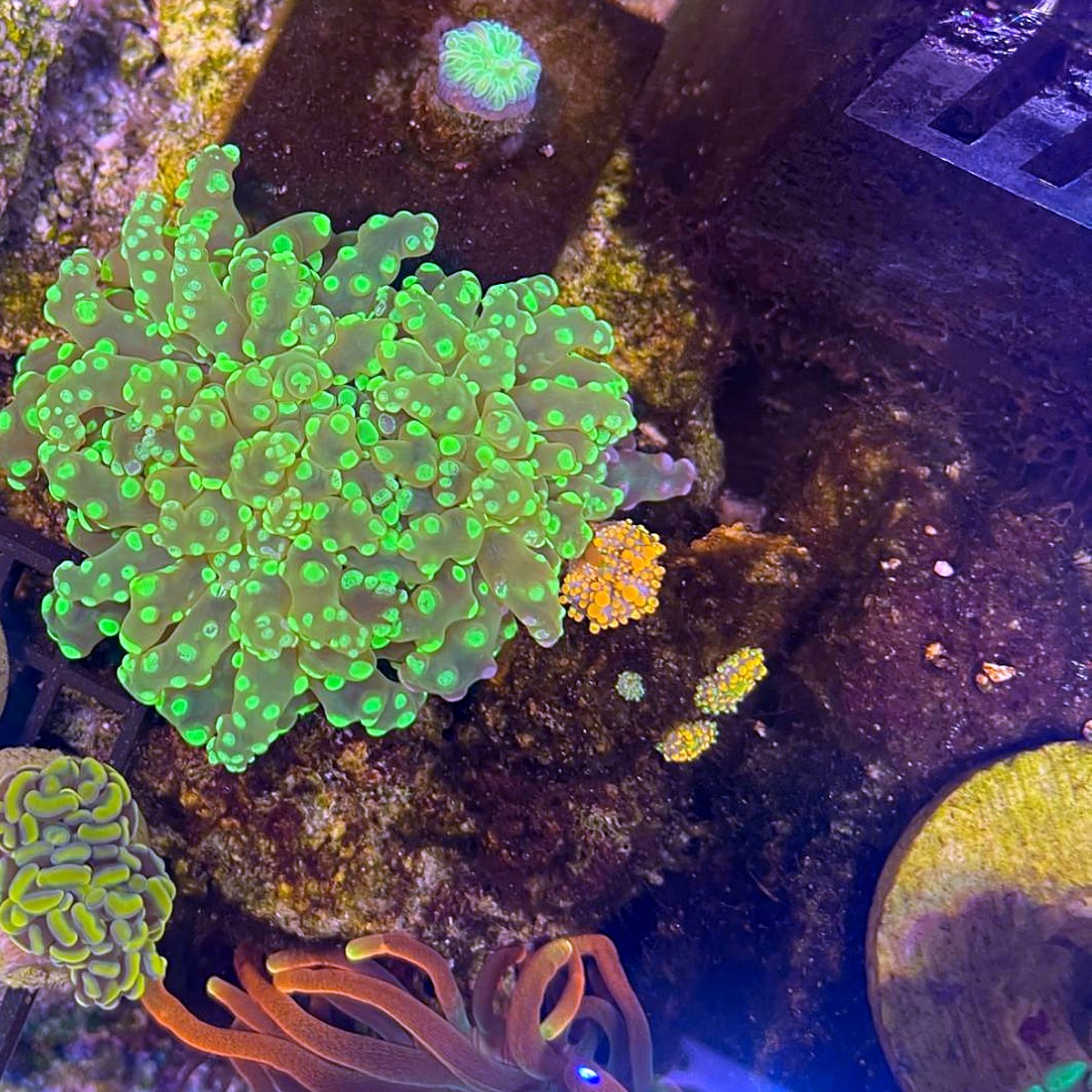
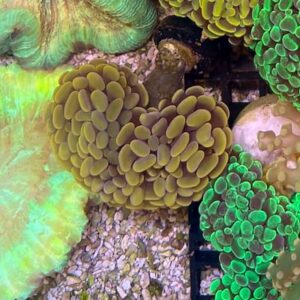
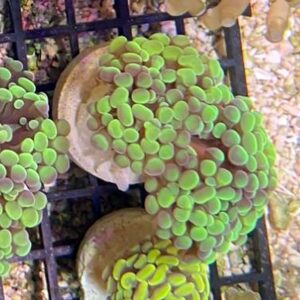
Buy Neon Green Branching Frogspawn Coral (Euphyllia paradivisa) in South Africa from Silkworm Shop in Johannesburg. This coral is supplied as a frag, with neon green colouring.
About Frogspawn Coral (Euphyllia paradivisa)
The frogspawn coral is a hardy large polyp stony (LPS) coral with frilled, branching tentacle tips that look like clusters of frogspawn. It grows into a branching colony and is closely related to the hammer and torch coral, with very similar care needs. A popular, rewarding coral for beginner and experienced reef keepers alike.
Coral care at a glance
- Common name: Frogspawn Coral (branching frogspawn coral)
- Scientific name: Euphyllia paradivisa
- Type: LPS (large polyp stony coral)
- Difficulty: Easy – suitable for beginners
- Lighting: Moderate (roughly PAR 100–200). Acclimate gradually to your lighting.
- Water flow: Low to moderate, indirect and random (turbulent) flow. The ideal is enough flow for the tentacles to sway and bounce gently, without being blown flat or pulled off the stalk.
- Placement: Lower to mid section of the rockscape or on the sand bed, on stable rock.
- Temperament: Semi-aggressive. Its sweeper tentacles can sting neighbouring corals at night, so leave a gap of about 7–10 cm (3–4 inches) on every side.
- Feeding: Photosynthetic, so it lives mainly off light. It also benefits from target-feeding small meaty foods such as mysis shrimp or finely chopped seafood once or twice a week.
Recommended water parameters
- Temperature: 24–27°C
- Salinity: 1.024–1.026 (35 ppt)
- pH: 8.1–8.4
- Alkalinity: 8–11 dKH
- Calcium: 400–450 ppm
- Magnesium: 1250–1350 ppm
Stability matters more than perfect numbers. Avoid sudden swings in alkalinity, temperature and salinity.
Acclimation recommendation
- Float the sealed bag in your aquarium for 15–20 minutes so the temperature matches. Keep the lights low while you do this.
- Dip the coral in a coral dip, following the dip’s instructions, to help prevent pests and hitchhikers. Use a separate container and never pour the dip or the transport water into your tank.
- Drip acclimate for 30–45 minutes. Place the coral in a clean container and slowly drip your tank water in, so salinity and pH adjust gently.
- Place the coral low in the tank in a lower-light spot, with gentle flow, away from its neighbours.
- Build up the light slowly. Leave it in the lower-light spot for the first 1–2 weeks, then, if it is happy, move it up gradually to its preferred position. Moving it into bright light too fast can bleach or burn it.
- Go easy on feeding for the first few days. Once the polyps are fully open and settled, start target-feeding.
Tips for success
- Flow check: gently swaying, bouncing tentacles that stay fully open mean the flow is right. If the tentacles are blown flat or retract, reduce the flow. If they hang still and collect debris, increase it.
- Place it once and leave it. Moving a coral repeatedly stresses it.
- Secure the frag on stable rock with coral glue or putty so it cannot be knocked over.
- If the tentacles stay retracted for more than a day, check flow, lighting and water quality, and keep it away from aggressive neighbours.
These are general care guidelines. Every aquarium is different, so always observe your coral and adjust to suit your system.

There are no reviews yet.