
Description
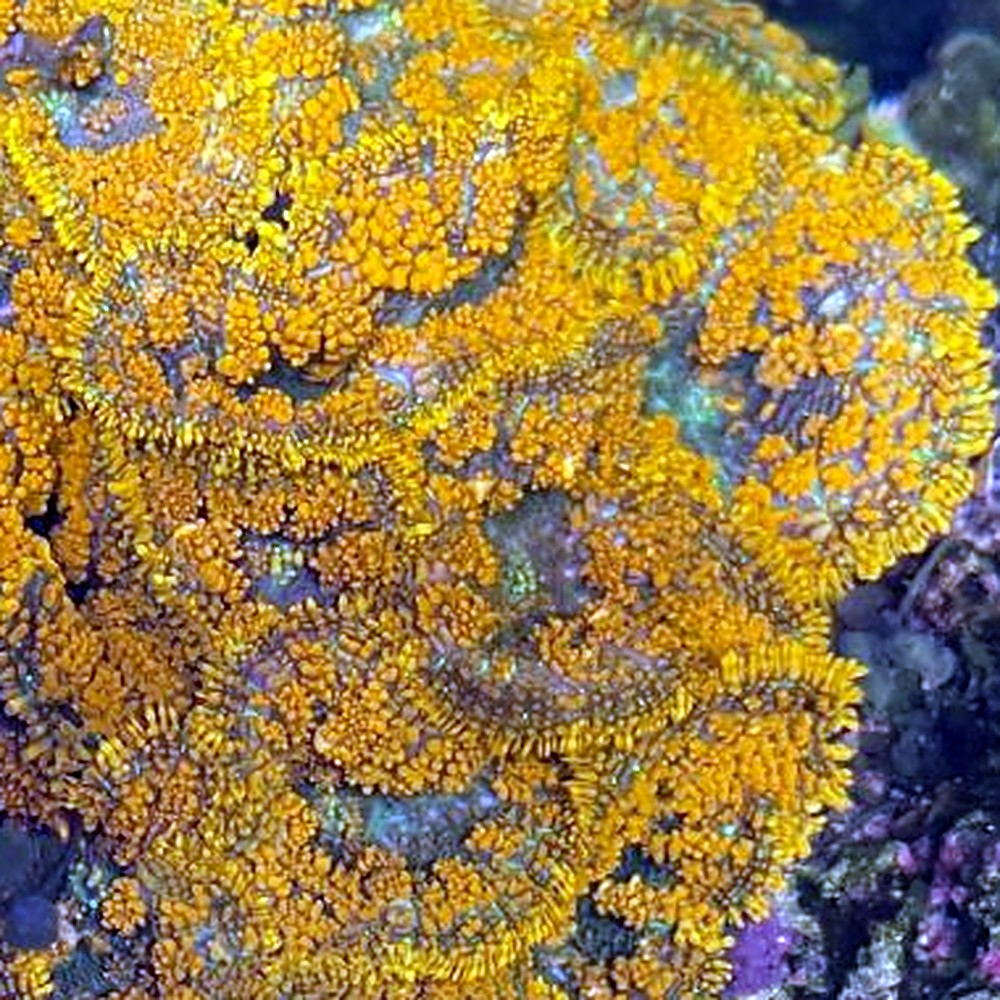
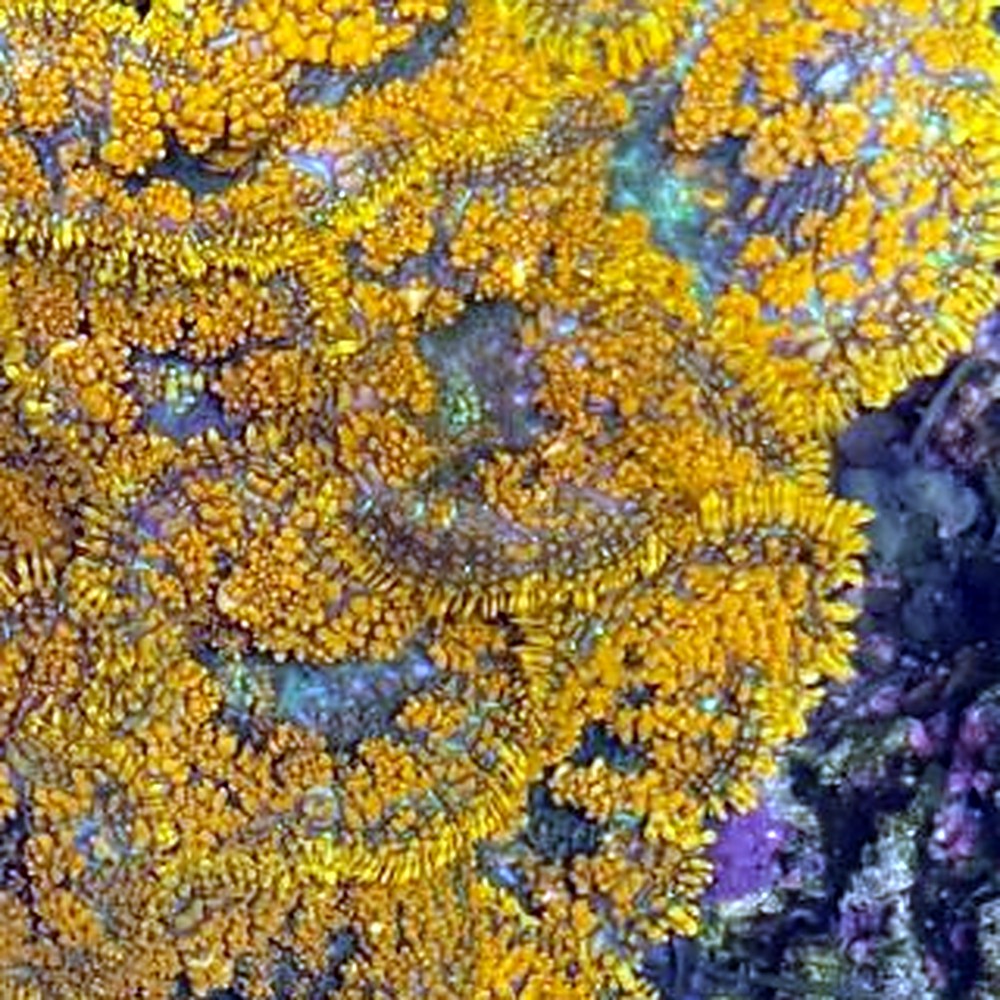
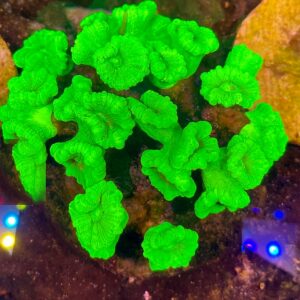
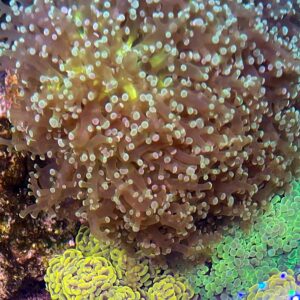
Buy Orange Hairy Mushroom Coral (Rhodactis sp.) in South Africa from Silkworm Shop in Johannesburg. This coral is sold per leaf (individual head), supplied on a small piece of rock or plug.
About Hairy Mushroom Coral (Rhodactis sp.)
The orange hairy mushroom is a hardy mushroom coral, a type of corallimorph, with a leaf covered in short, fuzzy papillae. It is easy to keep, spreads gently over rock and is a great, low-cost way to add a block of colour to a reef aquarium in South Africa.
Coral care at a glance
- Common name: Hairy Mushroom Coral (orange hairy mushroom)
- Scientific name: Rhodactis sp.
- Type: Soft (mushroom or corallimorph)
- Difficulty: Easy – suitable for beginners
- Lighting: Low to moderate (roughly PAR 30–100). Avoid very intense lighting.
- Water flow: Low to moderate. Gentle movement keeps the surface clean without folding the leaf over.
- Placement: On rock in the lower to mid section of the aquarium, in a lower-light spot.
- Temperament: Mildly aggressive. It can sting nearby corals and slowly spreads over rock, so leave a gap of about 5–8 cm (2–3 inches) from neighbours.
- Feeding: Photosynthetic, so it lives mainly off light. It also takes small meaty foods such as mysis shrimp or finely chopped seafood once or twice a week.
Recommended water parameters
- Temperature: 24–27°C
- Salinity: 1.024–1.026 (35 ppt)
- pH: 8.1–8.4
- Alkalinity: 8–11 dKH
- Calcium: 400–450 ppm
- Magnesium: 1250–1350 ppm
Stability matters more than perfect numbers. Avoid sudden swings in alkalinity, temperature and salinity.
Acclimation recommendation
- Float the sealed bag in your aquarium for 15–20 minutes so the temperature matches. Keep the lights low while you do this.
- Dip the coral in a coral dip, following the dip’s instructions, to help prevent pests and hitchhikers. Use a separate container and never pour the dip or the transport water into your tank.
- Drip acclimate for 30–45 minutes. Place the coral in a clean container and slowly drip your tank water in, so salinity and pH adjust gently.
- Place the coral low in the tank in a lower-light spot, with gentle flow, away from its neighbours.
- Build up the light slowly. Leave it in the lower-light spot for the first 1–2 weeks, then, if it is happy, move it up gradually to its preferred position. Moving it into bright light too fast can bleach or burn it.
- Go easy on feeding for the first few days. Once it is fully open and settled, start target-feeding.
Tips for success
- Place it once and leave it. Mushrooms detach and re-attach slowly, so moving them repeatedly stresses them.
- Secure the leaf on stable rock with a little coral glue or putty, or in a mesh, until it attaches.
- If the leaf stays shrunken or folded for more than a day, check flow, lighting and water quality.
- Mushrooms spread over time. Keep them away from corals you do not want them to overgrow.
These are general care guidelines. Every aquarium is different, so always observe your coral and adjust to suit your system.

There are no reviews yet.